After leaving Lake Grace, the exhibition will move to the HEART Gallery, Margaret River in December 2022
Check out the link below for more on this location
https://www.margaretriverheart.com.au/
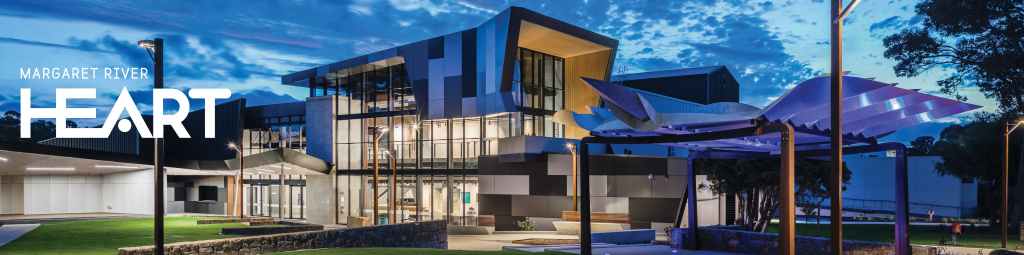
After leaving Lake Grace, the exhibition will move to the HEART Gallery, Margaret River in December 2022
Check out the link below for more on this location
https://www.margaretriverheart.com.au/
stitched and bound will go on tour after the Perth metro exhibition at Midland.
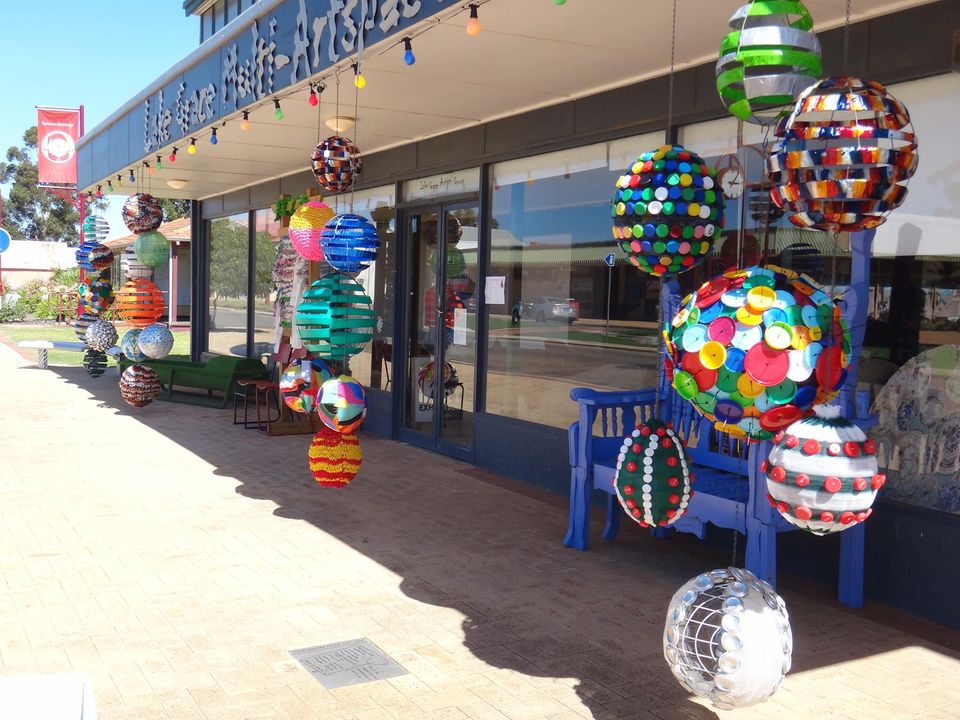
Our first stop will be Lake Grace Regional Art Space in November 2022
Check the link to find out more about this venue…
https://www.facebook.com/LakeGraceRegionalArtspace
As stitched and bound 2022 fast approaches here are the key dates to put in your diary
Entries Open 20 March 2022
Entries Close 30 April 2022
Notification of jury outcomes June 2022
Metropolitan Exhibition:
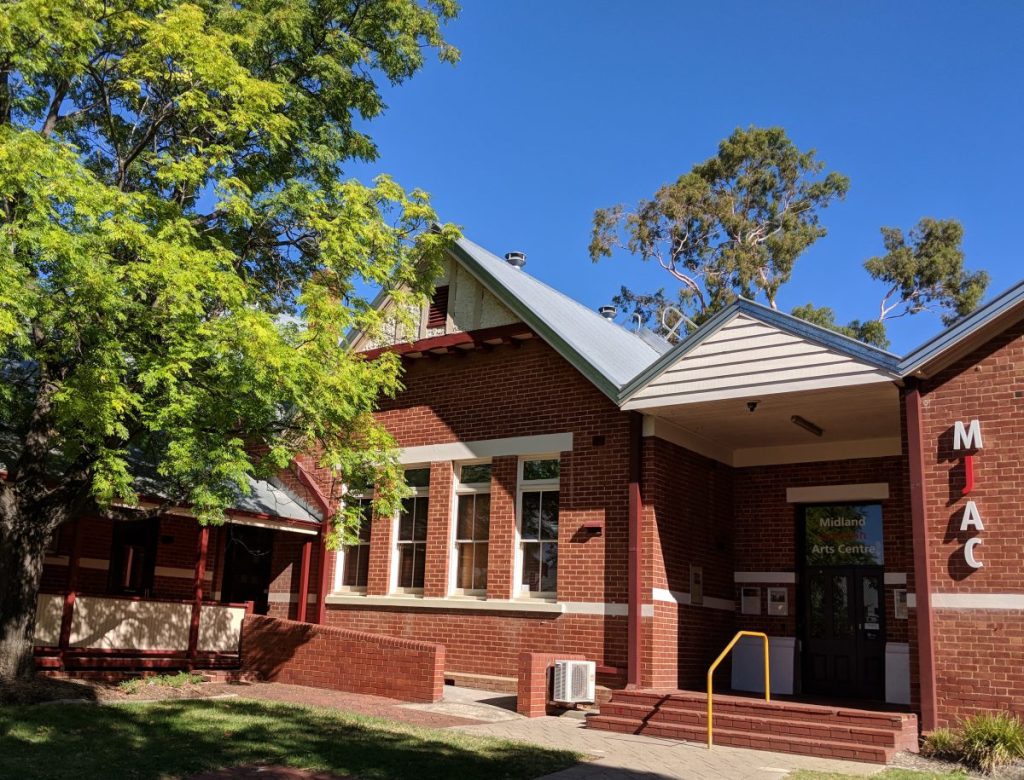
Midland Junction Arts Centre (MJAC) 10 September – 5 November 2022
Check out the link below to find out more about our venue
https://www.midlandjunctionartscentre.com.au/
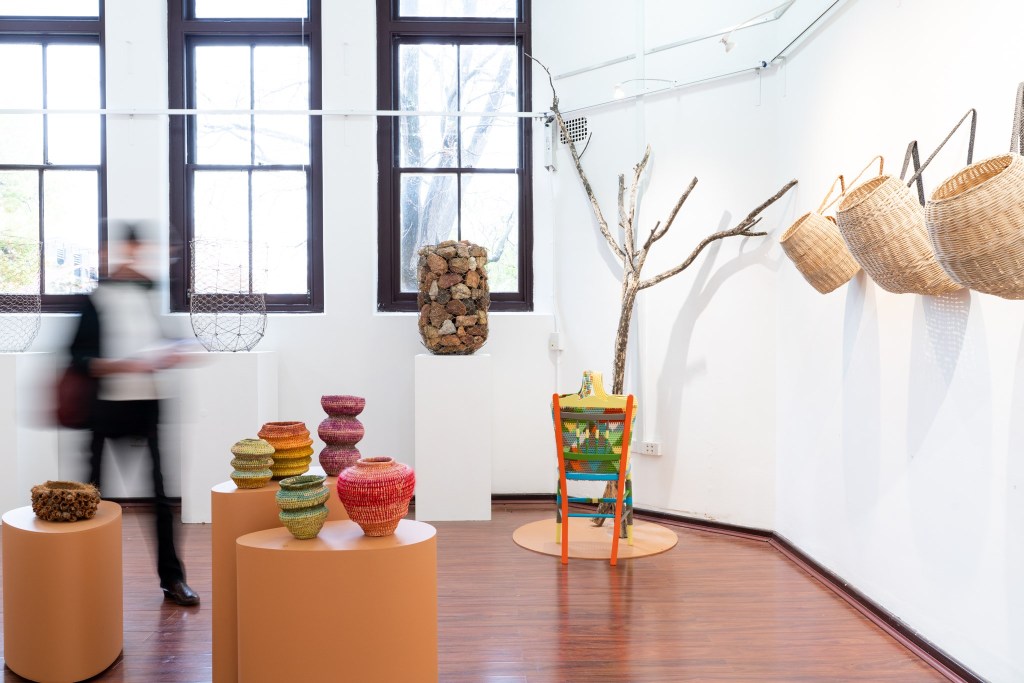
We recently posted an extract from an article by Sarah Entsminger (SAQA Journal) on writing artist statements that welcome. Sarah has kindly given permission to share the full article on our ‘help’ page.
Click here to read the article and see Sarah’s website below
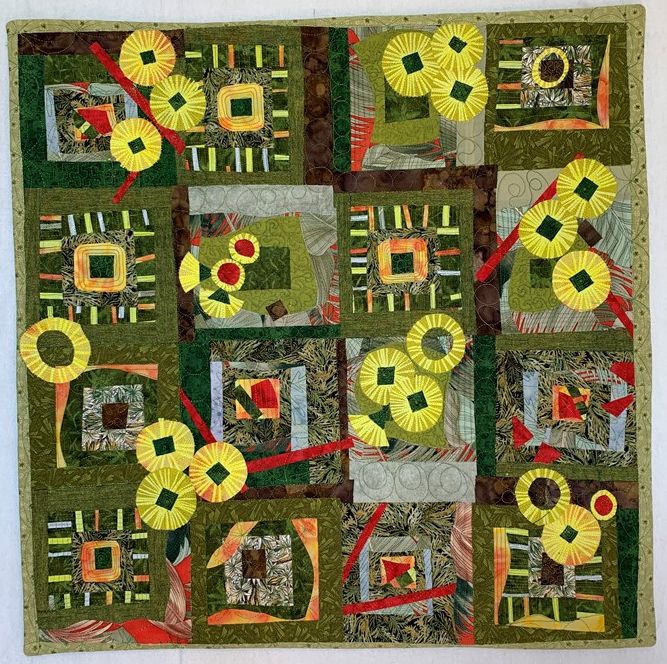
The tenth story is told by Robin…
The Illyarrie or Eucalyptus Erithrocorys is one of WA’s beautiful and fascinating trees. No one can ignore its spectacular display of red bud caps and fluffy yellow flowers in mid summer. A closer look reveals the amazing square shape of the centre, and the unusual arrangement of the stamens in each corner, the flattened base (pedicel) and stems below. The quilter in me had to reproduce it! So began my journey of collecting fabrics and ideas and experimenting with techniques.
Then Lisa Walton visited Perth and led a workshop, ‘Fantastic Fusion’, using fused fabrics and improvisational techniques. As I had taken my Illyarrie collection of fabrics, I soon found I had an interesting set of background pieces that cried out for an embellishment. Yellow flowers, but how? That is when I began fringing yellow strips and forming them into circles. I had my flowers. 16 blocks and many flowers later I had a quilt ready to free motion quilt. It was a very engrossing and satisfying piece of work which I entered into Stitched and Bound in 2019.
Most amazingly it was sold.
A story from Jan…
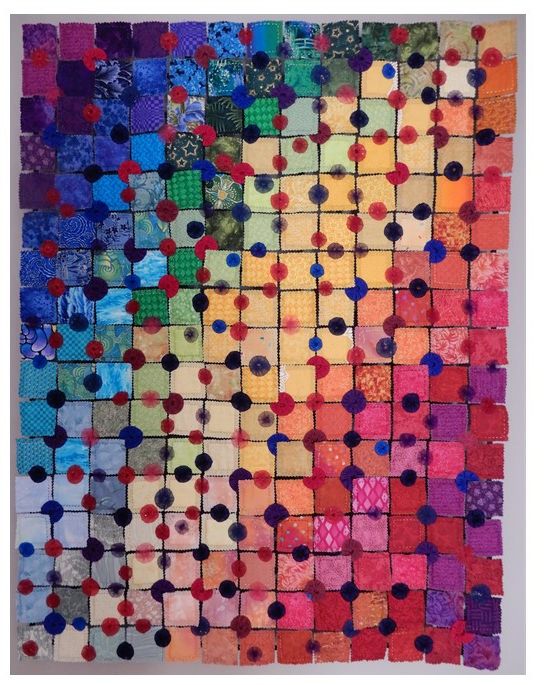
‘Some years back I needed some hand sewing to do while travelling. One batik fabric was chosen as backing to give the pieces some cohesion. A rainbow assortment of stash scraps were used to make the front. Batting off-cuts were used to pad out the little pillows which were stitched around with perle embroidery thread. Pinking shears neatened the edges.
A shoebox full of little squares stagnated for a couple of years before the next step revealed itself.
The inspiration came from the cooking show “Masterchef”. They have a challenge which requires the contestants to reinvent a traditional dish.
I applied the same criteria to my little quilted parcels, thinking they looked like ravioli.
Then came the problem – how to string them together.
Narrow black ribbon was appliqued vertically and horizontally to stabilise the pieces, grading the rainbow colours across the quilt.
Something was still missing. It needed a sauce – berry coulis was the answer. This was made with a variety of berry coloured sheers and tulles using the yo-yo technique. These were scattered across the quilt.
The entire quilt is hand stitched.
The reverse side of the quilt also looked interesting, so the next problem was how could it be hung so both sides could be viewed.
A custom made perspex strip was ordered with holes to correspond with each vertical band. Suspending the piece with fishing line through each hole ensured the quilt hung straight and could be viewed from each side.’
This is Ginny’s story…

‘Inspired by studying the Gees Bend group I made a series of quilts in work clothing. I like the unfinished rough results of seams , pockets, buttons etc which add to the texture. The quilt is about mining in Australia, because I was appalled at Leigh Creek SA to see the un-regenerated land after a mine had closed. All vehicles can erode our thin ancient soils and destroy flora so I copied a mining truck tyre pattern and created a flower stalk using paint and clothes as an ironic comment. I also like the impact of the hot oranges in the quilt which is free motion stitched.’
Here is meg Cowey’s story about her 2019 submission ‘Storm Warning’…

“I particularly love the view of a storm approaching across Gage Roads while travelling along Stirling Highway. I wanted to capture the view of rain clouds and glints of sunshine.
I had seen a technique on Pinterest where thin strips of various coloured fabrics were sewn horizontally to create a quilted landscape and then covered in net. It gave a lovely impressionist look that I was keen to try as a seascape. At about the same time, there was a presentation at our monthly meeting of the Contemporary Quilt Group about making non-traditional edges to quilts.
Because I had never used the technique before, I created a small piece to try out my fabric strips, their positioning and colour. This was very worthwhile as it made me realise that the fabric I’d chosen for the sky was actually much better suited as the sea.
Eventually I created a larger art quilt called ‘Weather Warning’ that I exhibited at QuiltWest 2017.
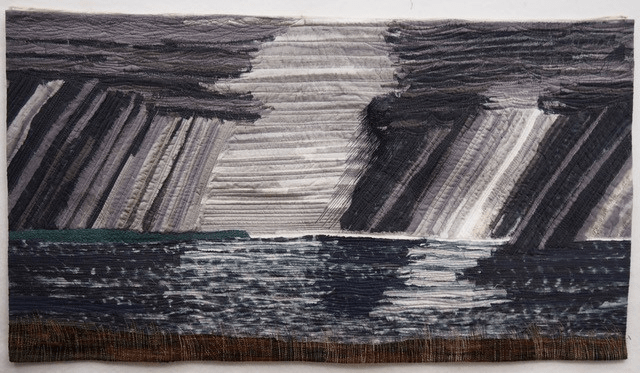
However, I kept my small sample piece, as I really liked the extended border of sea and rain cloud. When stitched and bound opened for entries, I included Storm Warning as my second entry. Of course, I was delighted that it was juried into the exhibition, but a little chagrined that my first choice was not selected!

We hope you are enjoying ‘The Stories Behind the Quilt’ posts
If you entered and exhibited at any of the past stitched and bound exhibitions we would love to hear your story. We want to inspire both new and old exhibitors to get working on an entry for the next one!
email your story to waqasandb@gmailcom – include a photo of your work if you were not a recent entrant
Here is Julie’s story about her quilt ‘Orange Peel’
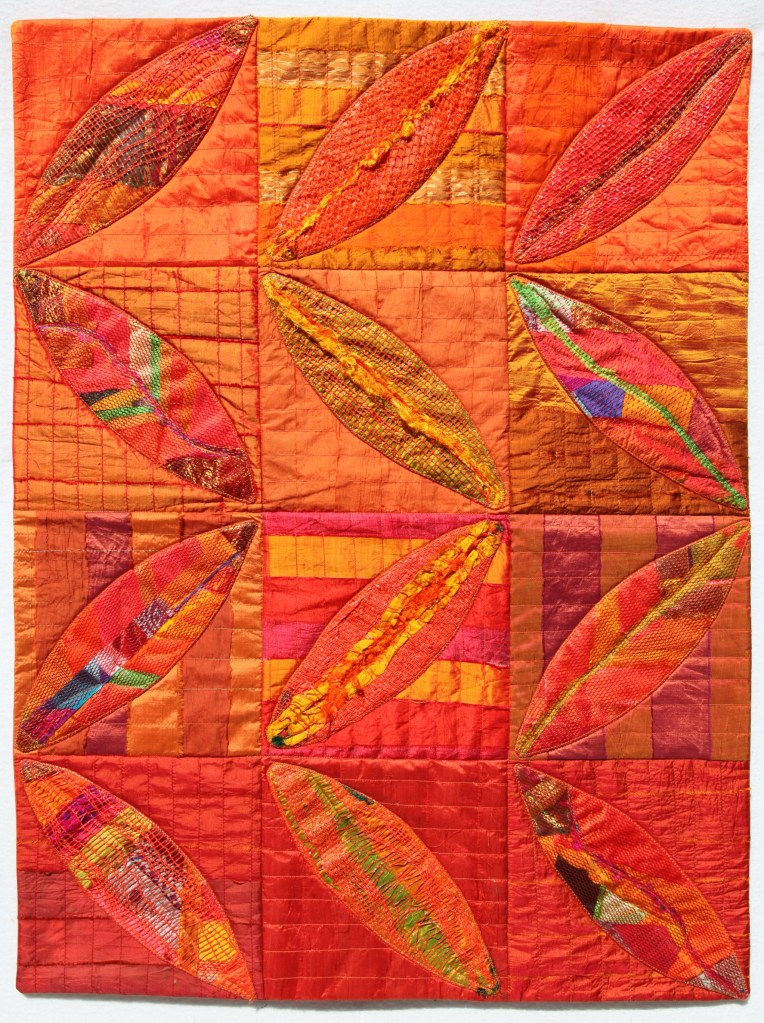
‘I began the orange peel quilt early in 2018 when I was playing around with Sari silks.
Ironing these onto light adhesive interfacing gives the fabric a bit more body and it’s easier to manipulate. It was also the time Woolworths was introducing its plastic bag ban, in fact everyone was talking about over packaging and waste in general.
Unpacking my shopping one day it twigged that my oranges were in an orange plastic net bag. We all love the old legend of Lafayette being invited to a celebratory dinner by George Washington. When he took out his knife and quartered his orange a lady at the dinner used the discarded segments to design her next quilt pattern.
So that was it! The idea that now the three areas of household waste, clothes, food and plastic could be represented. Sari silk for clothing, orange peel shape for food and the plastic net covering for the plastics. Twelve panels symbolised a year and that if we were mindful every household could help reduce landfill.
The quilt was backed using a repurposed designer dress from an op-shop.
Julie McAllister
 stitched and bound